
Quick answer
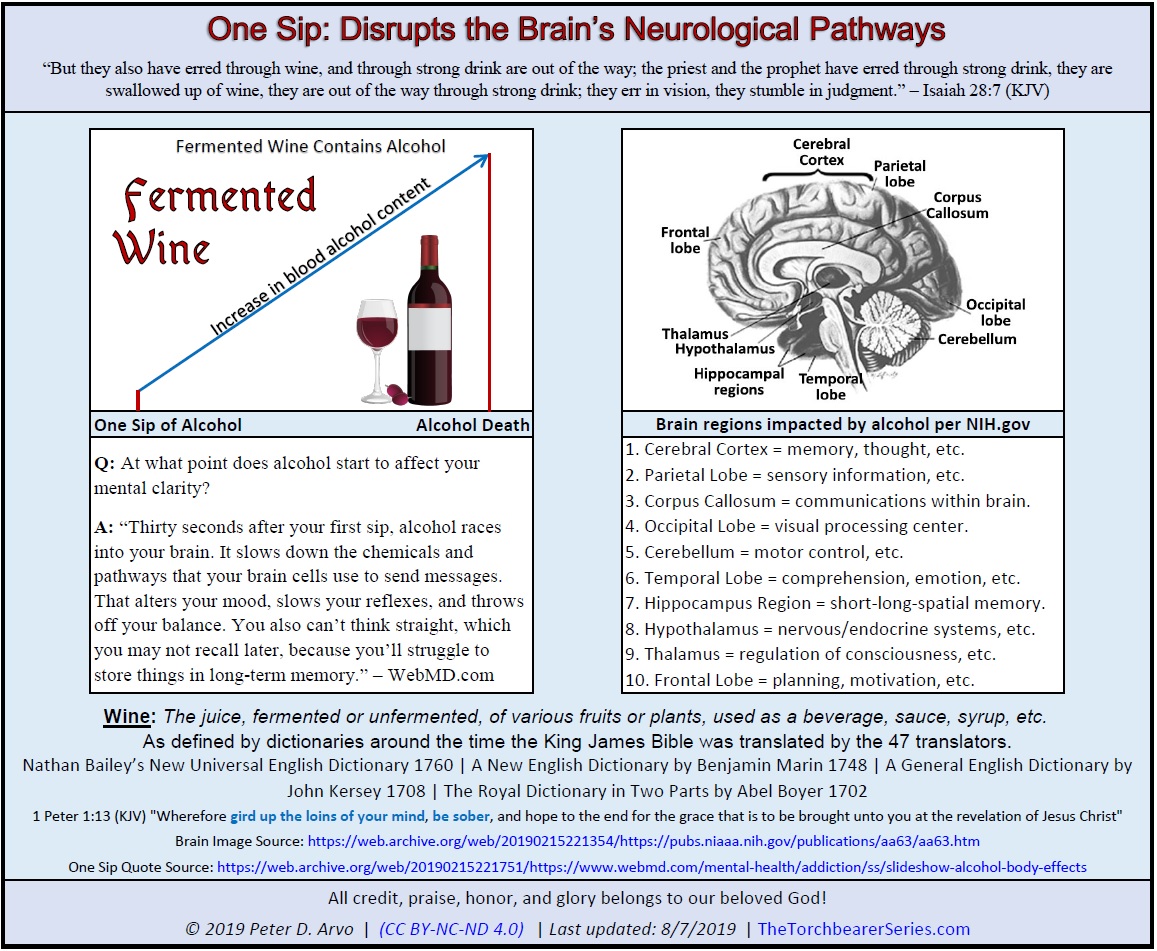
The supplied “One Sip” chart was built around a point the Bible already stresses in moral language: alcohol quickly affects clarity, judgment, and self-control. Modern official medical summaries describe alcohol as interfering with the brain’s communication pathways and affecting areas tied to memory, coordination, speech, balance, and judgment.
Why this matters biblically
When Scripture says “be sober,” “be vigilant,” or warns that priests, prophets, and kings err through wine, it is not using empty religious language. It is describing an impairment problem. That is why brain-focused evidence fits so naturally with the biblical warnings.
| Bible concern | Modern brain concern |
|---|---|
| Erring in vision and stumbling in judgment | Alcohol interferes with communication pathways and harms clear thinking. |
| Sobriety and vigilance | Alcohol affects reaction, planning, attention, and memory. |
| Avoiding stumbling or causing stumbling | Alcohol can reduce inhibition, impulse control, and coordination. |
Modern health sources used on these pages
Where health pages summarize modern evidence, they point readers to official public-health sources such as NIAAA, CDC, NCI, and the U.S. Surgeon General’s advisory on alcohol and cancer.
Frequently asked questions
Does this page claim one sip makes every person instantly drunk?
No. The point is simpler: alcohol affects the brain early, and the Bible repeatedly treats clear judgment as morally important.
Why put brain evidence on a Bible-wine site?
Because many visitors only think in terms of obvious drunkenness. The brain pages help explain why the Bible’s concern reaches earlier than that.